- NoticesNotices shall be delivered by email to the notice address designated by each party.
- Security incidentParty A shall provide written notice of a security incident within 24 hours, in accordance with the Notices article.
- IndemnityParty A shall indemnify Party B against covered third-party claims, subject to a separate $300,000 limit.
- Limitation of liabilityAggregate liability shall not exceed $100,000
. Indemnification is addressed in Section 8., excluding indemnification obligations. The separate indemnity limit in Section 8 applies to those obligations.
-
§ 7 · Security incident
A notice duty with no delivery rule.
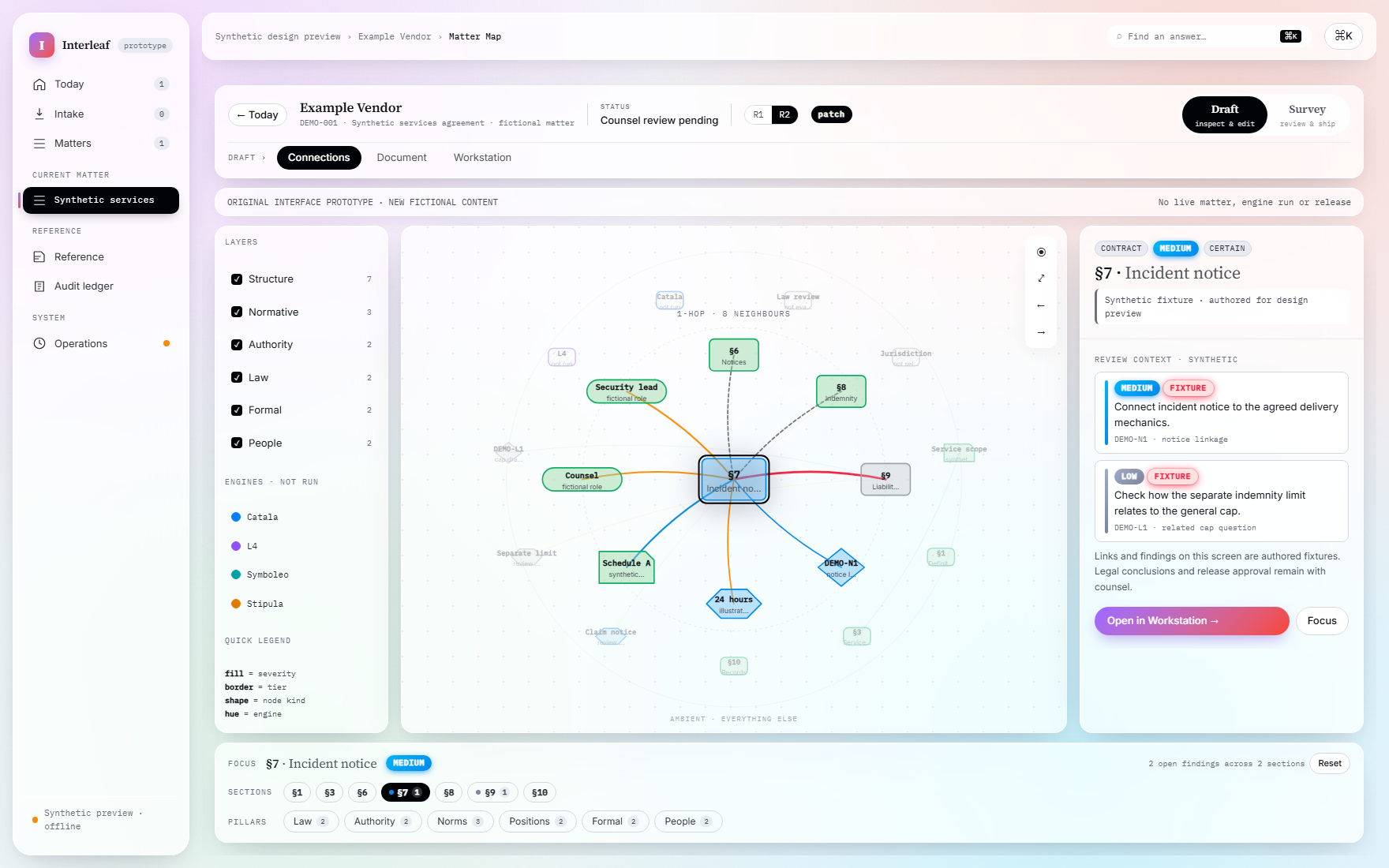
"Party A shall provide written notice of a security incident within 24 hours." Fine, but notice to whom, and how? Section 7 doesn't say.
-
§ 6 · Notices
The delivery rules live in another section.
Section 6 says notices go by email to each party's designated address. Nothing connects the incident notice to it. The first check flags exactly that gap.
-
§§ 8 and 9 · Indemnity and the cap
A cap that doesn't say what it covers.
The general cap is $100,000. The indemnity has its own $300,000 limit. Section 9 mentions indemnification without saying whether it sits inside the cap or outside it. The second check flags that.
-
Two edits, and both checks come back clean.
Section 7 now says notice goes "in accordance with the Notices article." Section 9 now carves indemnification out of the general cap and points to the separate limit. Same two checks: two findings before, none after.
-
The judgment stays with the person.
What starts the 24-hour clock? Which claims are covered? Do the limits reflect the deal the parties meant to make? A fixed rule can spot the pattern it was written for. It can't answer those, and it isn't supposed to.