Zach SternCommercial lawyer
Commercial lawyer · Chicago area

Zach Stern

I turn contract terms into decisions a business can act on, and I build the processes that make the next agreement easier.

Nearly 10 years
In-house at Dovenmuehle as the primary lawyer for its commercial and technology purchasing agreements.
7 years
As an attorney at Tishler & Wald: commercial financing, litigation and creditor work.
$17,487,520.30
A competing claim I helped defeat in court. The judgment was affirmed on appeal.

Experience

In-house · Feb 2017 to Oct 2026

Dovenmuehle

Corporate Counsel

Staff Attorney until January 2020

I was the primary lawyer for the company's purchasing-side commercial and technology agreements, from review and negotiation through signature, amendments and termination. I worked with business, technical, compliance and leadership colleagues so they knew what the terms meant for the work they planned to do.

  • Created the company's contract rider.
  • Built and used a negotiation reference: preferred positions, fallback language and the reasoning behind each.
  • Developed the NDA documents and the intake, review and signature process around them.
  • Turned access to vendors' assurance reports into a repeatable process.
How I handled agreements
Law firm · May 2007 to Feb 2016

Tishler & Wald

Attorney

Law clerk until November 2008

I worked on both ends of commercial credit: putting financing in place, and enforcing it when a borrower failed. That meant transaction documents and advice on rights and remedies, and litigation, arbitration and creditor bankruptcy work.

  • Credit and security agreements, notes, guarantees, mortgages, assignments and intercreditor arrangements.
  • Co-designed and ran a court claims process for a creditor client, outside bankruptcy.
  • Drafted the central trial-court motion that helped defeat a $17,487,520.30 competing claim. The judgment was affirmed.
Read the case
In-house practice

Every clause answers a business question.

My job was to make sure people had the answer before they signed, in terms of the work they actually planned to do.

Services agreementSketch
  1. Limitation of liability
  2. Indemnity
  3. Intellectual property
  4. Service commitments
  5. Termination
Illustration. The questions are the kind I answered, not any company's actual terms.
  1. Limitation of liability

    If this goes wrong, how much can we recover, and how much could we owe?

    A cap is a number until something breaks. Then it's the difference between a manageable problem and one the business has to absorb.

  2. Indemnity

    If someone sues over the vendor's work, who pays?

    Indemnity and the liability cap have to be read together. Whether one sits inside the other changes the answer.

  3. Intellectual property

    Who owns what gets built, and what can we keep using if we part ways?

    That question is cheapest to settle before the work starts.

  4. Service commitments

    What happens when the service goes down, and what do we get when it does?

    An uptime promise matters only if it comes with a remedy the business would actually use.

  5. Termination

    How do we get out, and what happens to our data and the work in progress?

    Exit terms decide whether ending a relationship is routine or a crisis.

Then I made the next agreement easier.

Contract rider

The company's own terms, ready to attach to a vendor's contract.

Negotiation reference

Preferred positions, fallback language and the reasons for each, so every position came with its why.

NDA process

Standard NDA documents and a clear path from request to review to signature.

Assurance reports

A repeatable way to get vendors' independent control reports, with the right documents and people lined up.

Tishler & Wald · Litigation

One bankrupt equipment lessee. More than 100 lenders claiming its equipment.

After Equipment Acquisition Resources went bankrupt in 2009, the equipment it left behind was claimed by more than 100 lenders and leasing companies. For our creditor client, I helped design and run a claims process in Cook County chancery court, outside the bankruptcy case.

I drafted the complaint that started it, coordinated service on the parties, worked with claimants' lawyers and kept the asset and claim records straight as they changed. The court authorized an auction, and every claim followed the equipment into the sale proceeds.

Read the case and the court record
Competing claim defeated $17,487,520.30

One competing creditor claimed this much of the proceeds. I drafted the central motion in the trial court, and the court rejected the claim.

  1. The equipment lessee files for bankruptcy. In December it abandons its equipment.

  2. Our client's chancery case begins with a complaint I drafted.

  3. The court authorizes an auction. Claims follow the equipment into the proceeds.

  4. Summary judgment against the $17,487,520.30 claim.

  5. The Illinois Appellate Court affirms.

  6. The Illinois Supreme Court declines to take the case.

ZMS Labs · Independent work

I also direct software projects built with AI tools. I test them the way I'd test evidence.

ZMS Labs is the name I use for my own projects. AI tools write the code. I decide what each project is for, direct the work and check what comes back. When a result fails, it stays on the record.

Interleaf · Contract review

A contract workstation that keeps the question next to the words.

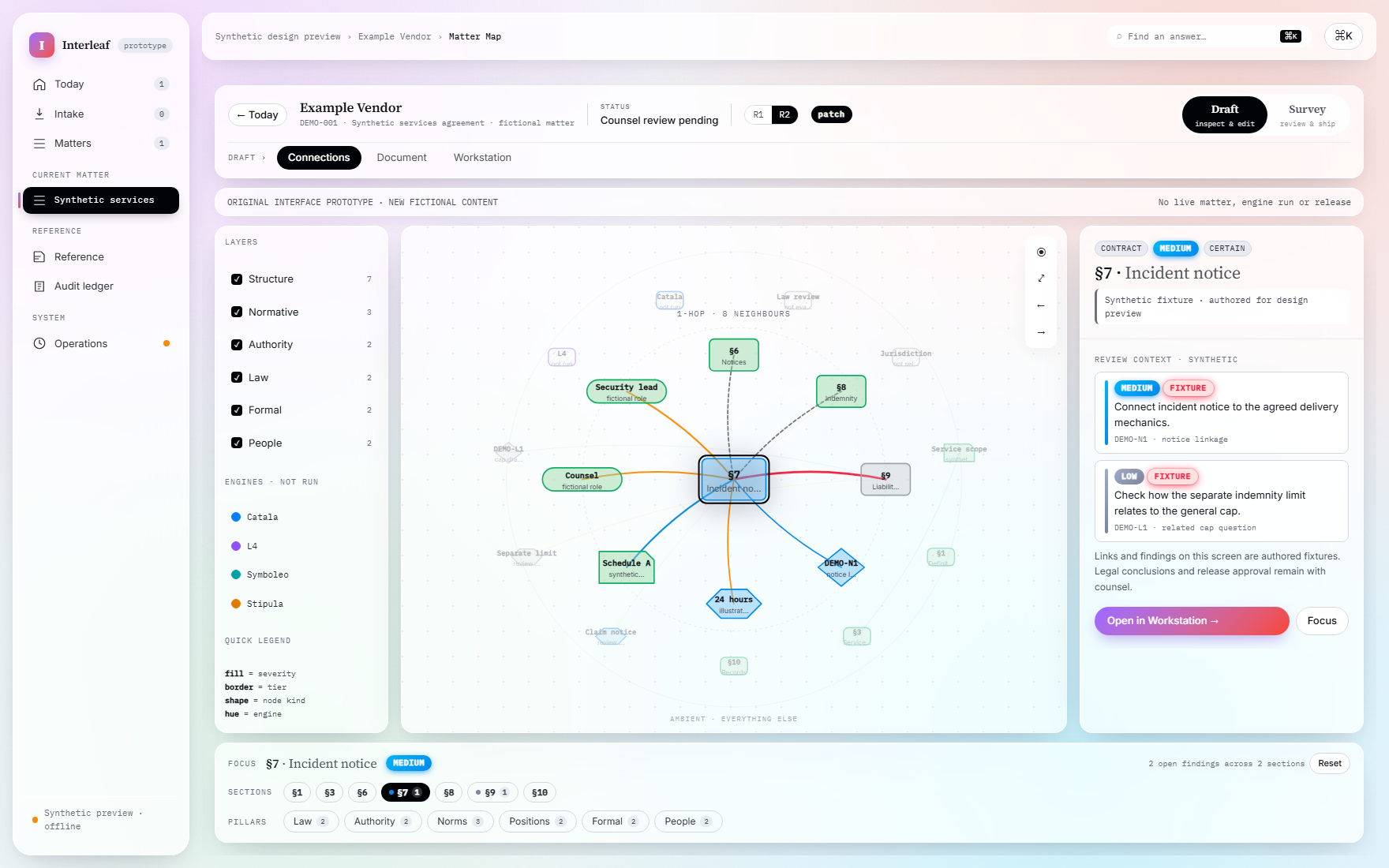
Reviewing a clause usually means hunting for the other clauses it depends on. Interleaf keeps them connected. In a recorded run on a sample agreement, two of its drafting checks flagged a notice clause that never said how notice is delivered and a liability cap that didn't say whether it covered the indemnity. After the edits, both checks came back clean. The legal judgment stays with the reviewer.

Prototype · drafting checks recorded September 19, 2026

Explore Interleaf
Interleaf's archived matter map: a contract's clauses drawn as connected nodes, with an inspector panel showing an open review question. Made-up content.
Archived prototype Made-up agreement
SaveBench · AI factory design

Can an AI design a factory that actually runs?

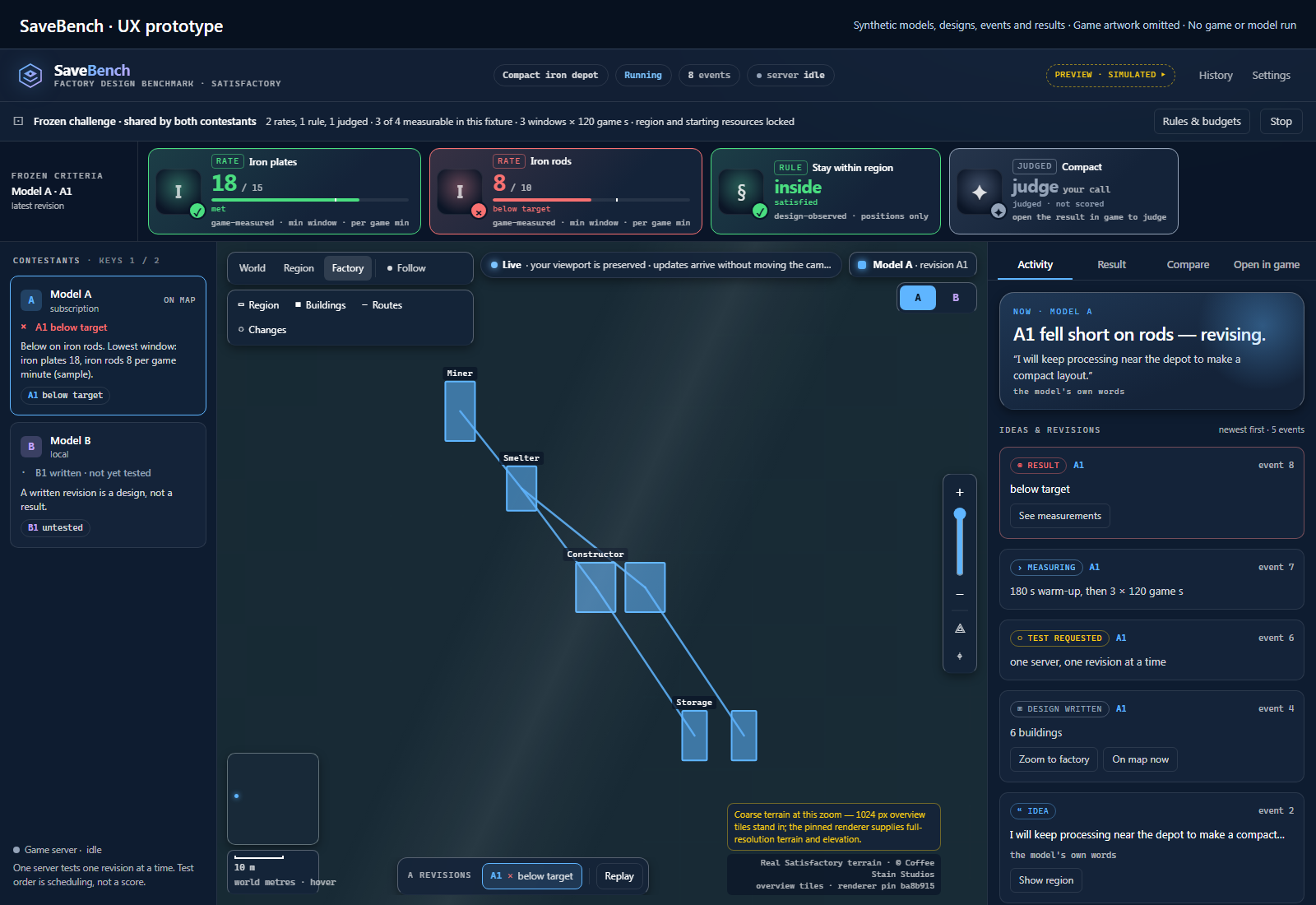
AI models design factories in the game Satisfactory, and the running game measures what they deliver. The test checks its own measuring tool before it judges anyone, and a failed run stays on the record instead of moving the target. When the rules rewarded hand-feeding machines over building a factory, I changed what it measures.

Recorded experiment · game runs from September 9 to 23, 2026

Explore SaveBench
The SaveBench workspace: a factory layout on a map beside the challenge's conditions and an activity feed, with made-up contestants.
Prototype Made-up sample data, game artwork removed
Epistemic Skills · AI agents

Teaching AI agents not to call it done until it's checked.

Seventeen written methods an AI agent can load to investigate a problem properly and confirm a change actually worked. The source is public. When this site first went live, that habit caught a real problem: 14 of its 28 files didn't match the fingerprint list made before publishing.

Public source · thirteen releases since July 2026

Explore Epistemic Skills
First publication · Sept 19, 2026
14 of 28files didn't match before the fix28 of 28matched on the live site after

More projects

All work, with dates and sources
How I work with AI tools

Some people let the wall of text fly by. I read it.

AI tools write the code. I decide what each project is for and check what comes back.

The habits come from practice. A claim needs support. A failed result stays on the record. The decision stays with the person accountable for it.

Let's talk.

LinkedIn is the best way to reach me.